Qualified, Yet Unemployed: What Are Employers Really Looking For?
Certificates open doors, but builders need portfolios, experience and clear CV stories to turn learning into employable proof.



What happened
Certificates alone rarely secure jobs; employers also need evidence of practical skills.
Why it matters
Builders must demonstrate ability to apply knowledge, otherwise hiring managers see a gap between theory and work.
What to do
Create a portfolio, sharpen your CV with results, and gain real‑world experience through internships or freelance projects.
Qualifications can open doors, but employers also want evidence of what you can do, which is why many builders search easy hacks on getting jobs.
You complete a course, earn a certificate and update your CV. You apply for jobs, prepare for interviews and wait. Yet the opportunities you expected remain out of reach.
This raises a frustrating question: if qualifications matter, why do they not always lead to employment?
Part of the answer lies in the connection between education, practical skills and employers’ needs. A certificate shows what you have studied, but employers may also want evidence that you can apply that knowledge to real tasks.
In an article published on 21 October 2026, the International Labour Organization (ILO) highlighted the importance of connecting training with employment and industrial development across Africa. Its message during Africa Skills Week 2026 emphasised that learning should contribute to decent work, improved productivity and more secure livelihoods.
For job seekers, the lesson is clear: learning matters, but demonstrating what you can do matters too.
Qualifications and Skills Serve Different Purposes
A qualification shows that you have completed a course or met an academic requirement. Employers may also look for problem‑solving, communication, teamwork, technical competence and the ability to deliver results.
For example, a degree in English may prepare someone for content writing, but an employer may also want writing samples, research skills, audience awareness and evidence that the candidate can meet deadlines.
Similarly, a business graduate may understand management principles but still need to demonstrate skills in spreadsheets, reporting, customer relations or project coordination.
Qualifications remain essential for many careers, especially those requiring specific degrees, licences or professional credentials. The key is to understand what else your field expects and find ways to demonstrate it.
Four Ways to Make Your Skills More Visible
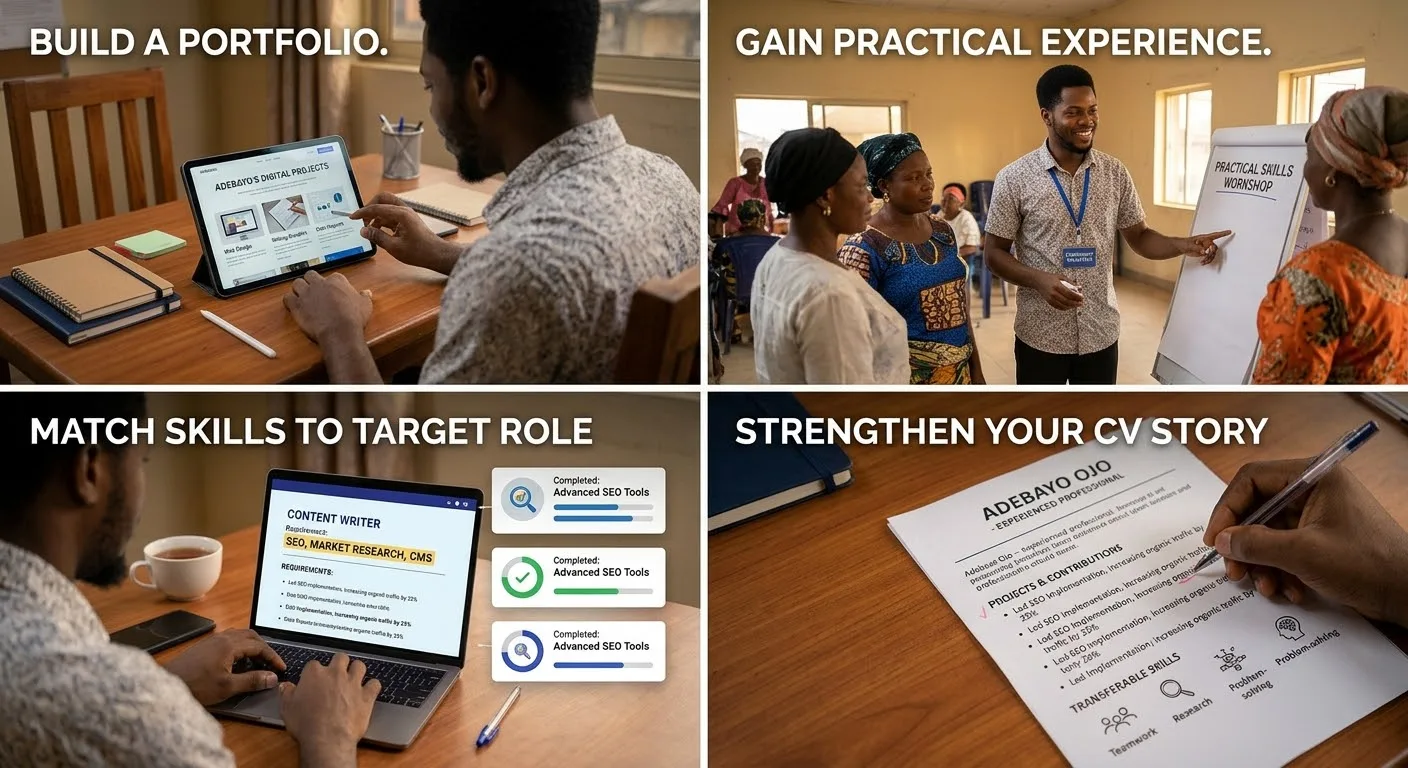
- 1. Build a Portfolio
- Build a simple portfolio of your best work
- Rewrite one CV bullet to include task, skill and outcome
- Apply for a short‑term internship or freelance gig
Written by our newsroom with AI help on the first draft, and checked by a person before publishing.