The Startup Mistake That Can Cost You More Than Money.”
Learn four practical steps to validate demand before spending months and money on product development.



What happened
Founders often build products before confirming real customer demand, leading to wasted time and money.
Why it matters
Early validation saves scarce resources and reduces the risk of launching a solution nobody wants.
What to do
Talk to real customers, build a minimal prototype, observe actual usage, and adjust before heavy investment.
Before you spend months building a product, make sure people actually need it – a key question is how to validate startup idea Nigeria.
Imagine spending six months building an app. You invest your savings, pay a developer, design a website and prepare for launch. You are convinced you have created something people will love.
Then launch day arrives. You announce your product, share it on social media and wait for customers to come in.
A few people sign up, but hardly anyone pays. Others try the product once and never return.
What went wrong?
Perhaps the problem is not the quality of your product. Perhaps you built something people do not need enough to use or pay for.
This is one of the most expensive mistakes a founder can make: building a product before finding out whether customers actually want it.
A Good Idea Is Not the Same as a Business People Need
Every founder starts somewhere, often with an idea they believe can solve a problem. But enthusiasm alone cannot tell you whether that idea has a viable market.
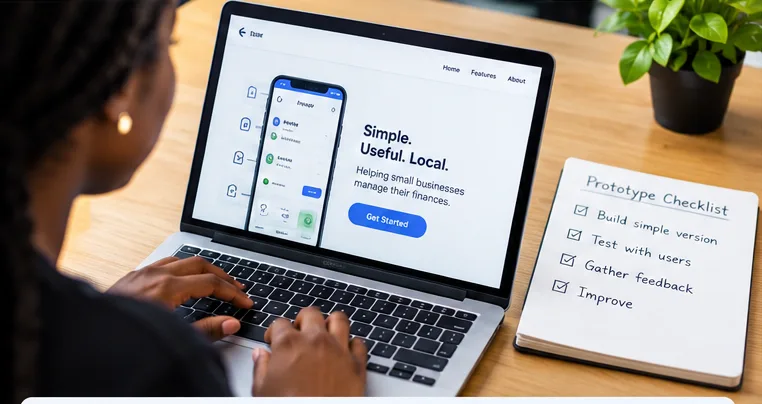
Suppose you want to build a platform that helps small businesses manage their finances. You believe business owners need it, and your friends agree that it sounds useful.
But have you spoken to business owners about how they currently manage their money? Do they struggle with the problem you want to solve? Are they already using another solution? Would they be willing to pay for yours?
These questions help separate assumptions from actual demand.
Someone saying, “That sounds like a great idea,” does not necessarily mean they will become a customer. A stronger signal is when people take meaningful steps towards using your solution, such as testing it, returning to it or paying for it.
Before investing heavily in development, understand the problem, the people experiencing it and the alternatives available to them.
Three Ways Building Too Soon Can Hurt Your Startup
- 1. You could spend money solving the wrong problem
- Interview at least five potential customers about their current pain points
- Create a one‑page landing page to gauge interest and collect email sign‑ups
- Run a cheap prototype or manual service with a small group and track repeat usage
Written by our newsroom with AI help on the first draft, and checked by a person before publishing.