AfCFTA Has More Benefits For SMEs in Africa. Here’s What You Should Do.
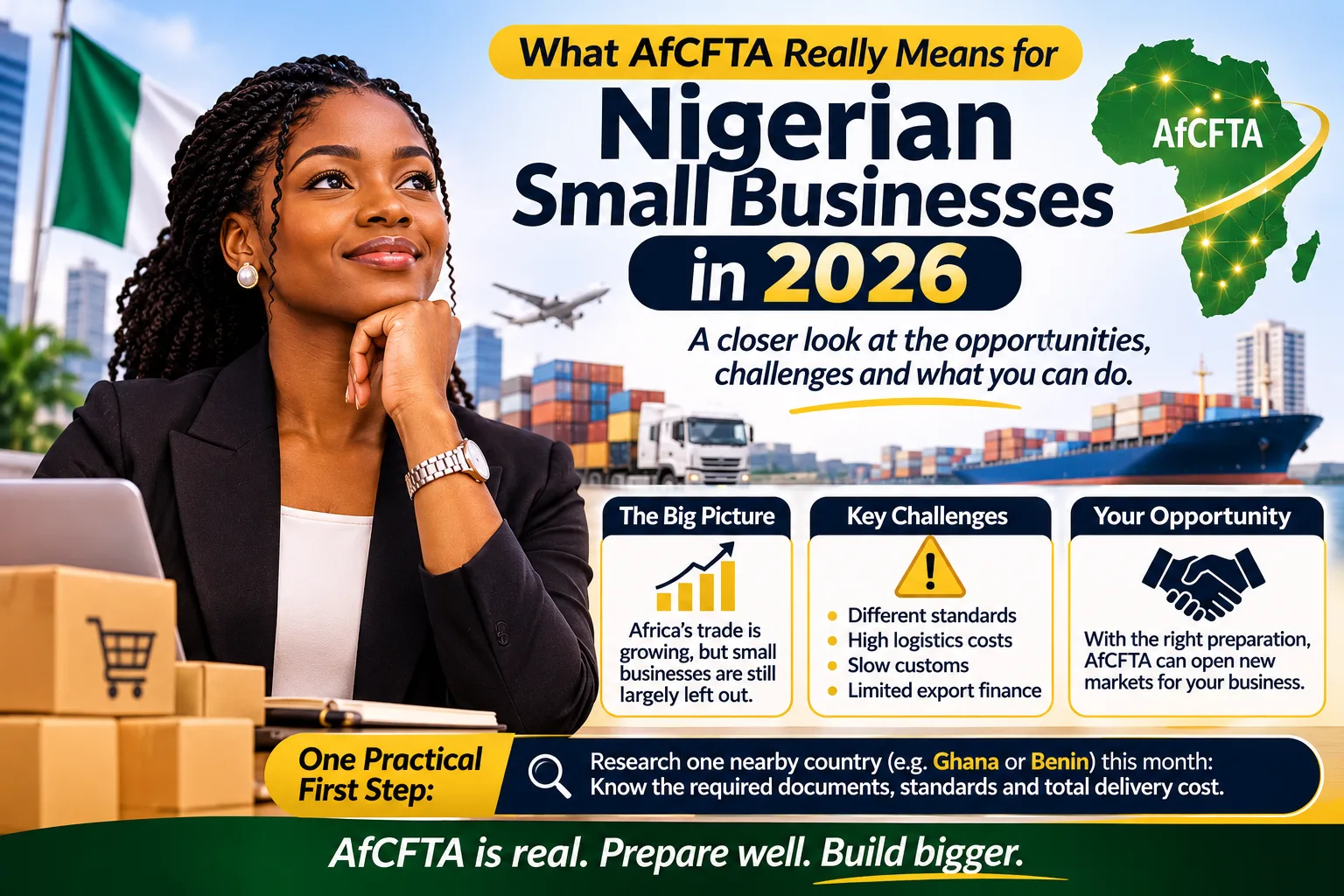
Most Nigerian SMEs see little benefit from AfCFTA, but a simple three‑step market check can start cross‑border sales.

What happened
The provided text does not contain any details about what happened.
Why it matters
Without facts, we cannot explain why it matters to builders.
What to do
Provide the full story or key points so a concise summary can be created.
AfCFTA (the African Continental Free Trade Area) is often described as a major opportunity for African businesses, and its impact on Nigerian small businesses is being closely watched. The idea is simple: goods and services should move more easily between African countries with lower tariffs and fewer barriers.
In reality, most Nigerian small businesses have not yet felt any major benefit from it.
The current situation
Trade between African countries is growing. Nigeria’s trade with the rest of Africa has increased in recent years, and the overall numbers look positive on paper. However, most of that growth is still driven by larger companies. The majority of Nigeria’s estimated 40 million micro, small and medium enterprises remain largely excluded from cross-border trade under AfCFTA.
For a typical small business owner in Lagos, Aba, Kano or Port Harcourt, selling to another African country is still complicated and expensive.
Why small businesses are mostly left out
Several practical problems continue to stand in the way:
- Different product standards and certification requirements between countries
- Slow and costly customs processes
- High transport and logistics costs within the region
- Limited access to affordable export finance
- Lack of clear, simple information on how to begin
Many small business owners hear about AfCFTA in the news but do not know the first practical step to take. As a result, the opportunity remains distant for most.
Written by our newsroom with AI help on the first draft, and checked by a person before publishing.